Showing posts with label coming-of-age. Show all posts

Tuesday, September 20, 2016

Coming of Age Books


Coming-of-Age
Try asking people for examples of coming-of-age novels.  Most readers agree that these stories follow the changes experienced as a character matures from youth or adolescence to adulthood.  Perhaps adulthood should not be measured in years, but in a character’s evolving and expanding view of the world.  Maybe it is when the character realizes that he/she is not the center of the world, but a participant.  Scarlett O’Hara took so long to reach that point that I was surprised to find Gone With the Wind on one coming-of-age list.  I think readers could argue if Harper Lee’s To Kill a Mockingbird should be replaced on coming-of-age lists by Harper Lee’s Go Set a Watchman.
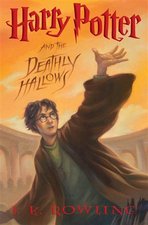
Older lists of coming-of-age novels contain books such as Anne of Avonlea, David Copperfield, and The Secret Garden.  Slightly newer lists will contain Catcher in the Rye, A Separate Peace, A Tree Grows in Brooklyn, Lord of the Flies, and S.E. Hinton’s The Outsiders.  An even newer list will have Nick & Norah’s Playlist, Secret Life of Bees, Kite Runner, Perks of being a Wallflower, Eleanor & Park, About a Boy and Fangirl.  John Green has dominated the market with Looking for Alaska, An Abundance of Katherines, and Fault in Our Stars.  J.K Rowling gave us the Harry Potter series and Suzanne Collins created Katnis Everdeen and the Hunger Games trilogy.  We have watched all of these characters mature whether we like or dislike the adults they became.
Although I have read and enjoyed many of the titles mentioned above, my coming-of-age list would include Girl With a Pearl Earring by Tracy Chevalier, Girl’s Guide to Hunting and Fishing by Melissa Banks, Cold Sassy Tree by Olive Ann Burns, Red Sky at Morning by Richard Bradford and Montana 1948 by Larry Watson.  It is an eclectic mix, spanning from 17th century Holland to the mid-century United States. Whatever your definition of coming-of-age novels may be, these books can be enjoyed long after adolescence.

-S. Bakos

Related lists:
Coming of Age books on Goodreads
11 Coming-of-Age Books from the Huffington Post
Flavia Comes of Age
Bildungsroman definition 
Great Coming of Age Novels on Pinterest
Harry Potter Comes of Age

Wednesday, July 25, 2012

What I Was by Meg Rosoff

What I Was is Meg Rosoff's first adult novel, but like her novels for teens, it is a coming of age story. A 16 year-old boy, nameless to the reader, is sent to St. Oswald's in 1962 after getting kicked out of another boarding school.  St. Oswald's is on the coast of East Anglia - a setting shared with Elly Griffiths' mysteries - with its salt marshes, Roman fort and a medieval lost town.  To escape from the brutishness of his school, he visits his idol, Finn, another teenaged boy who lives alone in a cottage that is cut off from the mainland at high tide.  Of course it turns out that living off the grid when you are only a teenager is not quite a safe thing to do, and tragedy strikes.  At just over 200 pages, this small book is a quick and enjoyable read, although not a favorite of mine like Meg Rosoff's Printz-winning novel How I Live Now.

Monday, January 21, 2008

My Latest Grievance by Elinor Lipman

"I was raised in a brick dormitory at Dewing College, formerly the Mary-Ruth Dewing Academy, a finishing school best known for turning out attractive secretaries..." writes Frederica Hatch, the teenage narrator of Elinor Lipman's wryly funny My Latest Grievance (2006.) Frederica has been raised by liberal college professor parents and is just beginning to rebel against their egalitarian child rearing practises when her father's unscrupulous and melodramatic exwife arrives on campus to stir things up in their well-ordered lives.
Elinor Lipman is one of my favorite contemporary authors; her books are funny in an understated way, character driven, with ironic plot twists and satirical observations of modern life. If you click on the Amazon reviews, you will find reviews that get rather defensive about why funny books can also be very good literature and why women's books can rise above chic-lit, but still be popular, and why Elinor Lipman has devoted fans but really ought to be a best-selling author and is under appreciated. And of course the nod to Jane Austen to whom all good women authors who write comedies of manners or anything close are compared. Leaving aside the defensiveness about humor and the obsession with Austen as the standard for all women's writing, you should read Lipman's books if you like a sardonic look at modern life. Readers don't have to suffer through oh-so-serious tomes to enjoy good literature. To find out more about her, read some of her essays posted on her website.